

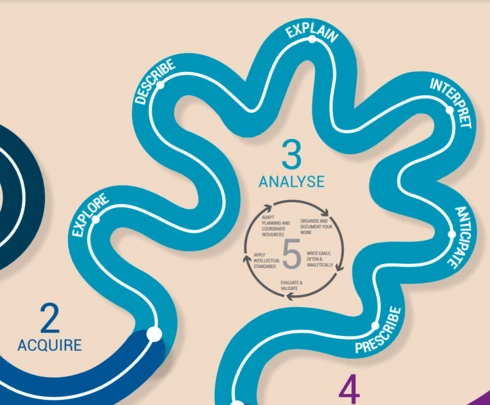
We provide independent and multisectoral data and analysis in the form of the following:
Global analysis of crisis severity, access issues, and risk
Anticipatory analysis and scenario-building
Analysis of multiple crises in one country
Analysis of one crisis across multiple countries
Dashboards and visualisations
Datasets
Our agility defines our work and enables us to design short- to medium-term crisis projects ad hoc. Today, aside from our worldwide analysis capacity, ACAPS runs several Analysis Hubs focusing on specific contexts.
ANALYSIS
HUBS
CrisisInSight is ACAPS' global analysis portfolio. Through a team of analysts across the world, we monitor over 150 countries with existing humanitarian crises or prone to disasters on a daily basis. We produce regular and timely analysis at global or crisis-level on existing crises, humanitarian trends, and emerging crises.
The Rapid Analysis Hub’s primary role is to respond to alerts from the START Network and produce response and anticipatory briefing notes, primarily on climate-related disasters, conflict and displacement, and disease outbreaks. In coordination with other hubs, the team also produces timely analysis on additional sudden-onset or conflict developments and helps monitor complex crises across different regions of the world.
Afghanistan faces one of the world's largest and most complex humanitarian crises, grown even more severe since the Taliban took control. ACAPS supports the humanitarian community in the country by providing independent analysis on the complex and interconnected challenges plaguing the humanitarian response and how humanitarian needs are understood. These challenges include, but are not limited to, the political economy, climate change and the environment, poverty and livelihoods, conflict dynamics, important features of the society and culture, and other aspects of the context.
The Colombia & Ecuador Hub delivers independent humanitarian analysis to strengthen evidence-based decision-making across both countries. It produces thematic, contextual and anticipatory analysis on protection risks, conflict, organised crime-related violence, displacement, health and climate risks, with a focus on the most vulnerable populations, and strengthens local analytical capacities through training and technical support.
The Middle East continues to contend with a range of interconnected crisis in Syria, Lebanon, Palestine, and Yemen. These combined contexts have led to millions displaced and reliant on aid for basic survival. The ACAPS Middle East Analysis Hub was established to conduct integrated analysis in support of humanitarian and development stakeholders working on crisis response in the region. We directly support these contexts with thematic specialisations in gender, protection, political-economy and, food security with the cross-cutting analysis of big data. We have a dedicated team of analysts based in Amman, supported by technical experts in secondary data analysis, needs assessment, scenario building, risk and analysis capacity building.
The humanitarian crisis in Ukraine has been rapidly evolving since February 2022, with significant information gaps on needs across the country. The ACAPS Ukraine Analysis Hub aims to produce timely and high-quality analytical products from an independent perspective to strengthen the evidence base for decision-making and response-programming among humanitarian stakeholders.