

Latest updates on country situation
23 September 2026
On 18 September, the entire population (9.4 million people) experienced the seventh nationwide blackout in 2026 before power was restored on 19 September. The outage stems from reduced energy production caused by shortages of imported oil after the US ban in January 2026, compounded by an underinvested grid and significant electricity production deficits. Repeated and prolonged power outages are disrupting water pumping, deteriorating neonatal care, and causing solid waste accumulation and extended water-cycle delays, elevating the risk of disease outbreaks. (UNCT Cuba 11/09/2026, France 24 21/09/2026, Reuters 18/09/2026)
21 May 2026
Sustained oil import shortages since early 2026 have triggered at least four nationwide blackouts and multiple large-scale provincial power outages, causing the collapse of transportation, energy, and food infrastructure, all critically dependent on fuel for production and maintenance. By April 2026, the cumulative impact of fuel shortages had directly or indirectly affected the entire population of 10 million people. These developments are unfolding while the US increases its political pressure against the Government by conditioning the delivery of humanitarian assistance on internal political change and the removal from power of most of the current government members. (FT 14/05/2026, DW 19/05/2026, The Atlantic 19/05/2026)
current crises
in
Cuba
CUB004 - Complex Crisis
Last updated 30/09/2026
Drivers
Cyclone
Political/economic crisis
Crisis level
Country
Severity level
6.9 High
Access constraints
3.0
Analysis products
on
Cuba
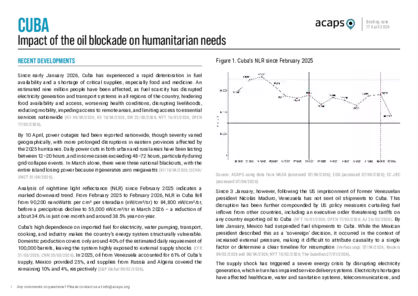
17 April 2026
Cuba: impact of the oil blockade on humanitarian needs
DOCUMENT / PDF / 746 KB
Since early January 2026, Cuba has experienced a rapid deterioration in fuel availability and a shortage of critical supplies, especially food and medicine. An estimated nine million people have been affected, as fuel scarcity has disrupted electricity generation and transport systems in all regions of the country.
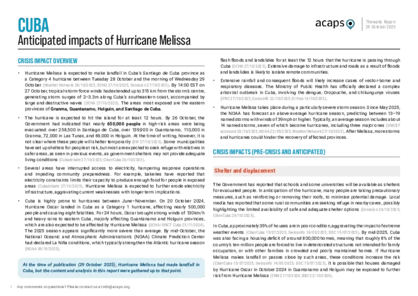
29 October 2025
Cuba: anticipated impact of Hurricane Melissa
DOCUMENT / PDF / 456 KB
Hurricane Melissa takes place during a particularly severe storm season. Since May 2025, the NOAA has forecast an above-average hurricane season, predicting between 13–19 named storms with winds of 39mph or higher.